
Common Commercial Construction Mistakes That Delay Projects | Ontario Guide
6 Min Read
Construction
Discover the most common commercial construction mistakes that cause project delays in Ontario and learn practical strategies to keep your project on schedule from planning to completion.
Common Commercial Construction Mistakes That Delay Projects
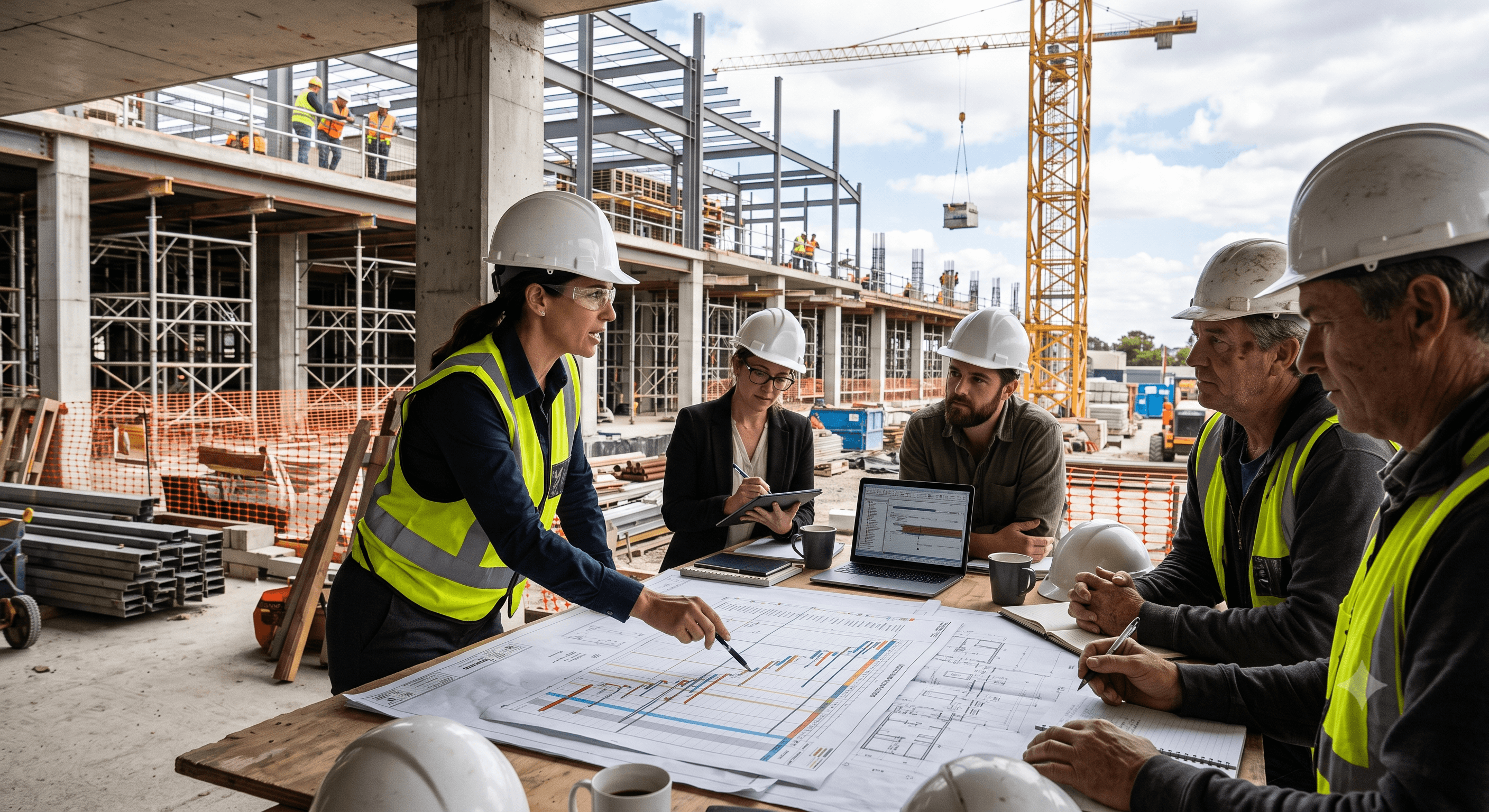
Delays are one of the biggest concerns in commercial construction, but many are preventable. This guide is written for business owners, commercial property owners, franchise owners, developers, property managers, and landlords planning restaurant, retail, office, and other commercial projects in Ontario, where commercial fit-outs and retail spaces are designed to enhance customer experience. It focuses on the planning and coordination issues that most often affect timelines, including incomplete planning, uncoordinated drawings, permit applications, material procurement, utility coordination, contractor selection, and practical ways to avoid those problems.
Early contractor involvement can also support a design-build method, which is becoming a more common way to manage commercial construction projects, and for franchise restaurants it helps teams use brand standards that dictate design and layout specifications and maintain a consistent brand identity across locations.
Quick Facts
Who should read this?
Business owners
Commercial property owners
Franchise owners
Developers
Property managers
Landlords
Planning Stage: Before and during construction
Primary Keyword: Commercial Construction Delays
Secondary Keywords:
Commercial Construction Mistakes
Construction Project Delays
Commercial Construction Planning
Common Commercial Construction Mistakes That Delay Projects
Commercial construction delays in Ontario are most often caused by incomplete planning, uncoordinated drawings, late permit applications, mid-construction design changes, and poor communication between project teams. Most of these causes are preventable with early planning, realistic scheduling, and involving your contractor before construction begins.
Every commercial construction project begins with a target completion date. The process typically moves through design, construction, and handover phases.
Whether you're opening a restaurant, completing a commercial fit-out or renovation, expanding an office, or building a new commercial facility, these projects often require specialized teams, and restaurant layout affects customer flow and service efficiency while building to brand standards supports a consistent customer experience and customer loyalty, especially for franchise expansion.
While some delays are unavoidable, many are caused by planning decisions made long before construction begins, even though flexibility is still essential when conditions change during construction.
Understanding these common mistakes can help business owners reduce risk and improve the likelihood of delivering a successful project on time, especially where fit-out work must also meet industry standards and regulations to avoid added delays.
1. Starting Before the Project Is Fully Planned
One of the most common mistakes is rushing into construction before the project has been fully developed.
Without a clearly defined scope, budget, and schedule, important decisions often need to be made while work is already underway.
This can lead to confusion, redesigns, additional costs, and unnecessary delays.
How to Avoid It
Clearly define the project scope.
Confirm business requirements.
Establish a realistic budget.
Develop a detailed project schedule before construction begins.
2. Incomplete or Uncoordinated Drawings
Construction teams depend on complete and coordinated drawings.
If architectural, structural, mechanical, and electrical drawings do not align, work may stop while conflicts are resolved.
These issues often lead to change orders and schedule adjustments.
How to Avoid It
Complete design coordination before construction.
Conduct design reviews.
Resolve conflicts before submitting for permits.
3. Waiting Too Long to Apply for Permits
Permit approvals are an important part of the construction process.
Submitting incomplete applications or waiting too long to apply can delay the entire project.
Municipal review times vary across Ontario, so permits should always be included in the project schedule.
How to Avoid It
Submit permit applications early.
Ensure drawings are complete.
Respond quickly to requests for revisions.
4. Making Changes During Construction
Changing layouts, finishes, equipment, or building systems after construction has started is one of the fastest ways to affect both schedule and budget.
Even small changes may require additional coordination, approvals, or rework.
How to Avoid It
Finalize design decisions before construction begins.
Limit changes to essential items.
Review all selections carefully during planning.
5. Ordering Materials Too Late
Some construction materials and equipment have extended lead times.
Commercial kitchen equipment, HVAC systems, electrical gear, custom millwork, and specialty finishes may require weeks or months to arrive.
Waiting too long to place orders can delay installation and occupancy.
How to Avoid It
Identify long lead items early.
Order critical materials as soon as possible.
Monitor supplier schedules throughout the project.
6. Poor Communication
Commercial construction involves many people working toward the same goal.
Owners, consultants, contractors, suppliers, inspectors, and subcontractors all need accurate and timely information.
Poor communication often leads to misunderstandings and unnecessary delays.
How to Avoid It
Hold regular project meetings.
Keep project documentation organized.
Share schedule updates with all stakeholders.
Address issues as soon as they arise.
7. Forgetting About Utility Coordination
Many projects are substantially complete but still cannot open because utilities have not been fully coordinated.
Electrical service, natural gas, water, internet, fire alarm monitoring, and other services may each require separate scheduling.
How to Avoid It
Contact utility providers early.
Include utility timelines in the project schedule.
Track installation dates throughout construction.
8. Underestimating Existing Building Conditions
Renovation projects sometimes uncover hidden conditions that were impossible to see before demolition.
Examples include:
Structural deficiencies
Water damage
Aging electrical systems
Plumbing issues
Hazardous materials
While not every issue can be predicted, thorough site investigations reduce surprises.
How to Avoid It
Conduct detailed site assessments.
Review available building documentation.
Allow contingency in both budget and schedule.
9. Setting an Unrealistic Schedule
Every business wants to open as quickly as possible.
However, construction schedules must account for design, permits, procurement, inspections, and unforeseen challenges.
An unrealistic schedule often creates unnecessary pressure without improving the outcome.
How to Avoid It
Build realistic milestones.
Include contingency for approvals and inspections.
Review the schedule regularly throughout the project.
10. Choosing a Contractor Based Only on Price
The lowest proposal is not always the best value.
Experience, communication, planning, safety, and project management all contribute to a successful project.
Choosing a contractor based solely on cost may increase the risk of delays later.
How to Avoid It
Review experience.
Check references.
Compare project scope, not just price.
Understand how the contractor manages projects.
Many delays begin with decisions made before construction even starts.
The most common mistakes include:
Starting before permits are issued.
Rushing the design process.
Making frequent design changes.
Waiting too long to order materials.
Poor communication between project team members.
Not coordinating utility connections.
Choosing a contractor based only on price.
Creating unrealistic project schedules.
The best way to reduce project delays is to make important decisions before construction begins.
Projects with a clear scope, coordinated drawings, realistic schedules, and early contractor involvement are generally better positioned to manage challenges and maintain progress throughout construction.
Project Planning Checklist
Before construction begins, confirm that you have completed the following: ☐ Defined the project scope. ☐ Finalized design drawings. ☐ Submitted permit applications. ☐ Confirmed utility requirements. ☐ Ordered long lead materials. ☐ Selected your contractor. ☐ Established a realistic construction schedule. ☐ Planned for contingency.
**What causes the most commercial construction delays?**Planning issues, incomplete drawings, permit timelines, design changes, material availability, utility coordination, and communication challenges are among the most common causes.
**Can every delay be avoided?**No. Some factors are outside anyone's control. However, many delays can be minimized through careful planning and proactive project management.
**Do permits affect construction schedules?**Yes. Permit approval timelines vary by municipality and should always be considered when planning a commercial project.
**Can design changes delay construction?**Yes. Changes made after construction begins often require additional coordination, revisions, and rework.
**Why are utility connections sometimes delayed?**Utility providers operate on their own schedules. Coordinating electrical, water, gas, telecommunications, and fire monitoring services early helps reduce delays near project completion.
**Does weather always delay construction?**Not necessarily. While weather can affect certain activities, many delays are related to planning, approvals, procurement, and coordination.
**Can material shortages affect the schedule?**Yes. Specialty materials and equipment often require extended lead times, making early procurement an important part of project planning.
**When should I involve my contractor?**Many projects benefit from involving a contractor during the planning stage. Early collaboration can improve budgeting, scheduling, and constructability before construction begins.
For additional information, consult:
Ontario Ministry of Labour, Immigration, Training and Skills Development
WSIB Ontario
Final Thoughts
Commercial construction delays are not always caused by what happens on site. In many cases, they begin during planning, design, permitting, or coordination.
By understanding the most common causes of delays and addressing them early, business owners can make better decisions, reduce project risks, and improve the likelihood of completing their projects on time and within budget.
Successful projects are built on preparation, communication, and realistic expectations.
