
Choosing the Right Commercial Location | Ontario Commercial Construction Guide
4 Min Read
Construction
Learn why choosing the right commercial location is one of the most important decisions before construction begins. Discover the key site selection factors that influence commercial construction projects across Ontario.
Choosing the Right Commercial Location Is More Important Than You Think
Quick Answer
Commercial spaces succeed or struggle long before construction starts, and location is one of the first decisions that shapes cost, approvals, access, customer traffic, and long-term performance. For brand owners, landlords, developers, and businesses planning a new build or fit-out, this article explains how site selection affects commercial construction projects across Ontario, from zoning, utilities, and municipal approvals to community growth and the site conditions that can increase complexity and cost.
The Building Is Only Part of the Investment
When people think about commercial construction, they often focus on the building itself, but the investment is also in the commercial space and the underlying real estate strategy.
The design.
The finishes.
The schedule.
The budget.
Those are all important.
But one decision influences every one of them.
The location.
Investing in commercial property can build equity while securing operating space.
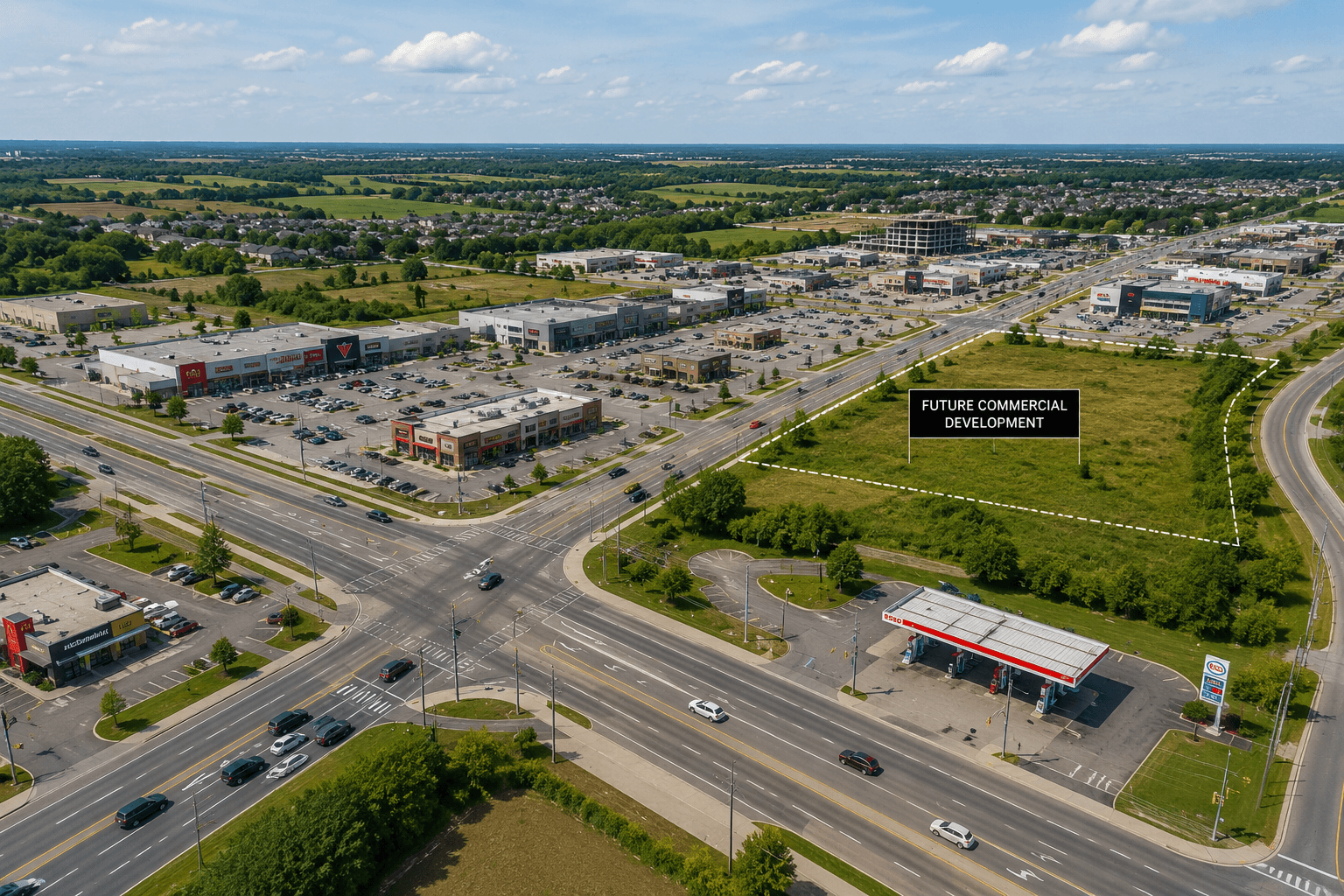
Whether you're opening a restaurant, developing a retail plaza, renovating a commercial unit, or expanding your business into a new community, the site you choose will shape nearly every stage of the project.
Commercial construction doesn't simply adapt to the location.
The location defines the construction strategy, and owning your premises can allow more customization without a landlord's approval, though purchasing usually requires significant upfront capital and ongoing responsibilities.
A Great Location Is More Than High Traffic
One of the biggest misconceptions in selecting commercial spaces is that the busiest location is always the best location.
Traffic is important.
But successful commercial projects evaluate much more than vehicle counts.
Questions worth asking include:
Is the property properly zoned, and are approvals required so it can permit the intended business operations?
Are water, sanitary sewer, storm services, hydro, and gas readily available?
Can delivery trucks access the site efficiently?
Does the property provide safe vehicle circulation?
Is there adequate parking?
Should the building condition be assessed before leasing, including infrastructure and likely repair needs?
Can the site’s layout and size support current operations and offer scalability for future growth?
Are neighbouring businesses complementary to the proposed development?
Lease structures and terms can also vary depending on the space’s purpose and market demands.
The answers to these questions often influence construction costs more than the purchase price of the land itself.
Growing Communities Create Different Opportunities
Ontario continues to experience significant growth outside its largest urban centres.
Communities such as Shelburne, Alliston, Bradford, Innisfil, Milton, and many others continue attracting new residents and businesses.
For developers and commercial property owners, these markets create exciting opportunities.
They also require different planning.
Infrastructure may still be expanding.
Utility capacity may vary.
Emergency services may be farther away.
Material suppliers and specialty trades may require additional travel.
Municipal review processes may differ from one community to another.
By contrast, major shopping hubs in Toronto and the wider Ontario market show a different scale of retail demand, with Toronto Eaton Centre featuring over 230 retailers and restaurants, Yorkdale Shopping Centre offering 270 stores and restaurants, and Square One standing as Ontario’s largest shopping destination with 330+ stores in a leading mall environment that serves the city and surrounding region.
Shopping tourism is also significant globally, with the market valued at $1.2 trillion in 2018.
Understanding these local conditions early helps projects move forward with fewer surprises.
Site Conditions Affect Construction Costs
Two commercial properties may appear similar on paper.
In reality, they can have completely different construction requirements, and those site differences also affect how much fit-out work is needed to transform empty commercial spaces into functional environments.
Existing grading.
Underground utilities.
Environmental conditions.
Access roads.
Soil conditions.
Stormwater management.
Existing buildings.
Each of these factors can influence the project's budget, schedule, and overall complexity.
Commercial fit-outs often include design, construction, and installation phases, and those choices can shape brand identity, visibility, and the overall highlights of the finished space while maintaining quality standards.
Early site investigations help identify these conditions before they become costly problems during construction and help teams develop realistic permit, scope, and cost plans.
Disciplined project management helps control cost risk, especially since budget overruns affect 30% of construction projects and effective oversight can reduce construction costs by 20%.
Think Beyond Today
A commercial building is a long-term investment.
Longer lease durations can provide stability, but they may also be harder to exit if your business needs to downsize.
The surrounding community will continue to change after construction is complete.
Before committing to a site, consider questions such as:
Are new residential communities planned nearby?
Are road improvements scheduled?
Will future commercial development increase customer traffic?
Are new schools, transit routes, or employment centres planned?
Choosing a location should support both today's business needs and tomorrow's opportunities. If part of the property will be leased to another party, vacancy risk can also affect future cash flow.
Construction Begins Before Construction
One of the biggest lessons in commercial construction is that successful projects often begin before anyone steps onto the site. Planning should also review lease structure, not just physical site conditions.
Feasibility studies.
Site evaluations.
Utility reviews.
Municipal discussions.
Landlord coordination. Total occupancy costs go beyond base rent and can include utilities, maintenance, and taxes, so every order of due diligence should account for those terms early. A gross lease is a flat fee where the landlord covers taxes, insurance, and maintenance, while in a net lease the tenant pays base rent plus one or more operating expenses, and in a triple net lease (NNN) the tenant pays all building operating costs, which can significantly affect tenant expenses.
Traffic analysis.
Environmental investigations.
These activities are part of construction planning, even though no equipment has arrived yet. In retail, a percentage lease is common and adds base rent plus a share of sales, and leasing often suits newer or fast-growing businesses that need flexibility.
The strongest projects invest time in understanding the site before investing money in construction.
Ontario Construction Fact
Did you know?
Before a commercial project can proceed, municipalities may require additional approvals beyond the building permit. Depending on the location and scope, projects may involve zoning compliance, site plan approval, conservation authority requirements, servicing reviews, transportation studies, or other applicable law approvals. Understanding these requirements early helps reduce delays later in the project.
Field Insight
We've learned that some of the best commercial construction decisions are made long before drawings are finalized.
Strong project outcomes depend on regular communication among owners, consultants, and builders.
A location may appear ideal at first glance, but careful evaluation often reveals opportunities or constraints that significantly influence the project.
That evaluation should also consider accessibility regulations to ensure ADA standards for disabled access, along with sustainable building goals such as LEED certification, which promotes sustainable building practices through water efficiency and sustainable site development and can reduce energy consumption by 30% on average as a measurable result.
Looking beyond the building itself allows owners, landlords, and developers to make more informed decisions before construction begins.
Good construction starts with understanding the site.
Great construction starts with choosing the right one.
Final Thoughts
Choosing the right commercial location is about far more than finding available land or vacant retail space, because available options may include office, retail, and industrial settings depending on the business model.
It is about understanding how that property will support construction, operations, customer experience, and long-term business growth. Space class also matters, with Class A properties offering newer, higher-end environments and Class B or C often providing more affordable options.
Retail stores often improve the customer experience through ambient details like lighting and music, and a distinctive brand experience can significantly strengthen loyalty. At the same time, the right store should suit your product range and feel like a long-term home for the business.
Owning commercial property may also bring tax advantages such as mortgage interest deductions. At VOK Construction Group, we believe successful projects begin with asking the right questions before construction starts.
Because when the right location is combined with thoughtful planning and disciplined execution, commercial construction becomes more predictable, more efficient, and better positioned for long-term success.
