
Why Construction Site Security Starts Before the First Tool Arrives
7 Min Read
Construction
Discover how connected security systems, live CCTV, and reliable internet improve construction site safety, project management, and operational efficiency from day one.
Why Construction Site Theft Prevention and Security Start Before the First Tool Arrives

Quick Answer
Construction site theft is best prevented with connected, day-one security: live CCTV, remote monitoring, smart access control, wireless sensors, and reliable temporary internet that protects equipment, materials, and crews while keeping the project visible in real time. For project owners, contractors, commercial construction managers, and other stakeholders across commercial, retail, and residential builds, construction site security is no longer just about installing a fence or locking a trailer at the end of the day.
Modern commercial construction projects require continuous monitoring, controlled site access, dependable connectivity, and systems that tie security into project management before mobilization begins. Whether a project is located in downtown Toronto or a growing community like Shelburne, early planning around CCTV, access management, temporary internet, and even sustainable site practices helps prevent theft, reduce vandalism and unattended risk, avoid costly delays, and keep construction progress on track from day one.
Construction Sites Don't Stop When Workers Go Home
When the workday ends, a construction site doesn't simply become inactive.
Materials remain on site.
Equipment stays parked.
Temporary electrical installations remain energized.
Across the construction industry, construction site theft prevention matters because sites still hold valuable equipment and valuable materials that thieves may target even during working hours.
For project owners and contractors, those hours when nobody is on site often present the greatest security risk, especially on commercial projects that must meet stricter building codes, safety regulations, and compliance requirements.
Construction site theft costs between $300 million and $1 billion annually, and in 2021 more than 11,500 thefts were reported at U.S. job sites, with an average loss of about $6,000 per incident.
Less than 25% of stolen construction materials are ever recovered, and recovery rates for stolen items at construction sites are estimated at around 7%.
Good construction security isn't built on distrust.
It's built on preparation.
In commercial construction, that also means coordinating multiple trades and navigating complex regulatory processes, which increases risk when the site is unattended.
The goal isn't to watch people.
Theft occurs both after hours and in broad daylight, when unauthorized individuals can appear to belong on site.
The goal is to protect the project, improve visibility, and respond quickly when something unexpected happens, since delays, labor shortages, and supply chain disruptions can quickly increase exposure and costs.
Modern Construction Requires Wireless Sensors and Modern Security
Commercial construction projects are becoming more connected than ever before.
Project managers are expected to monitor progress, respond to issues quickly, and keep projects moving, as strong project management helps prevent costly delays and budget overruns.
For many projects, only the Site Superintendent visits the site every day.
Project Managers, consultants, owners, and clients may only visit occasionally.
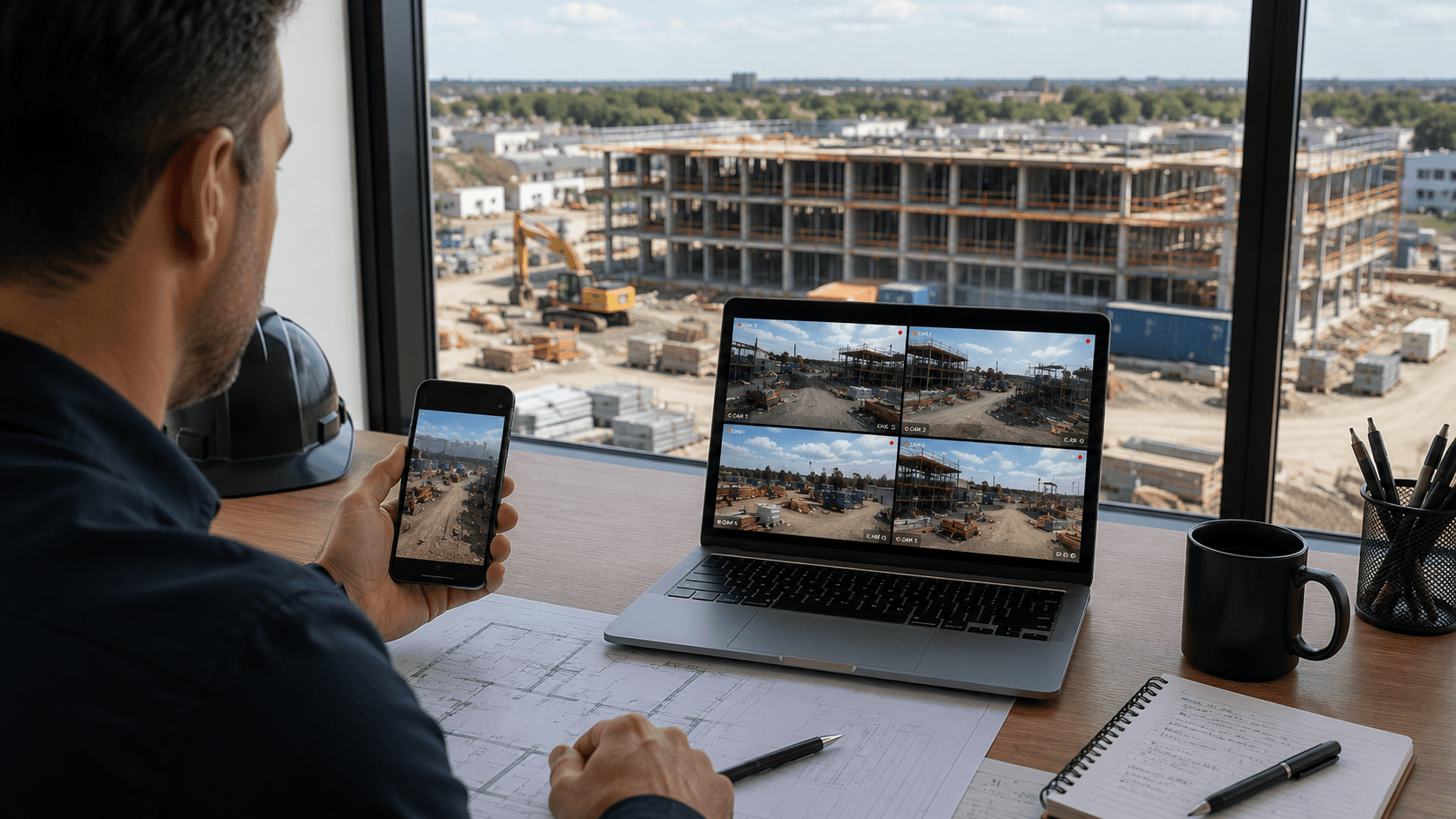
Remote monitoring helps bridge that gap by adding active oversight, one of the most effective strategies and security measures for keeping the project schedule and quality standards on track. Construction management depends on keeping the project schedule and quality standards on track.
Modern CCTV systems allow project teams to monitor:
• Site activity during evenings and weekends
• Material deliveries
• Equipment locations
• Weather conditions
• Site safety
• Construction progress
• Unexpected incidents
Monitored systems are more effective than passive or standard security cameras alone to prevent theft, and cellular active cameras generally outperform standard security cameras for theft prevention.
Live visibility allows project teams to make informed decisions without unnecessary travel.
Security has become part of project management, helping address job site theft while supporting clearer communication and coordination with stakeholders.
Reliable Internet Is the Foundation
One of the biggest challenges isn't choosing the camera.
It's providing internet.
Unlike completed commercial buildings, construction sites often begin before permanent telecommunications infrastructure is available.
That creates a problem.
No internet means:
• No live CCTV viewing
• No remote monitoring
• No cloud recording
• No smart access control
• Limited communication with connected devices
This is especially common in Ontario's growing communities and newly developed commercial areas.
Temporary Internet Solutions for Construction Sites
For temporary construction sites, internet options are often limited.
Many traditional internet providers cannot immediately provide service because infrastructure has not yet been installed.
In some rural projects, only one provider may even offer coverage.
For many commercial construction projects, a 5G Wireless Business Internet solution offers the most practical balance between speed, installation time, and cost, provided reliable cellular coverage exists.
For projects in remote locations, Starlink may be the best option.
Although it has a higher monthly cost, it provides dependable internet in locations where traditional providers simply cannot.
The right solution depends on selecting temporary internet that supports proactive budget management and financial control throughout the project, while balancing cost, performance, and available resources:
• Project location
• Cellular coverage
• Project duration
• Required upload speeds
• Number of connected devices
• Camera quality
• Budget
Reliable internet is no longer considered a luxury.
It has become part of modern construction operations.
Smart Access Reduces Unnecessary Travel
Construction security isn't only about cameras.
Managing access is equally important as a workplace security issue tied to protecting people and property. It also helps reduce internal theft and employee theft risk.
Imagine a project located two or three hours away from the office.
Someone forgets a key.
A delivery arrives unexpectedly.
Employees or subcontractors require temporary access, and vetting subcontractors can help reduce inside-job theft risk on job sites. Remote access tools also help maintain organization and reduce job-site disruptions when multiple teams need entry.
Without a smart access system, someone may need to drive several hours simply to unlock a gate or retrieve a key.
Internet-connected smart lock boxes allow project managers to:
• Grant temporary access remotely
• Remove access immediately
• Track who entered the site
• Reduce unnecessary travel
• Improve accountability
This kind of controlled access also creates access logs that can help identify unauthorized individuals.
For remote commercial projects, this technology can save significant time while improving security, while also supporting professionals working across a city or on a distant town job without unnecessary trips.
Choosing the Right CCTV System
Not every construction project requires the same security setup.
The ideal solution depends on available power, internet connectivity, project duration, and budget, and the best camera choice should support a multi-layered security strategy.
When selecting a commercial construction camera system, consider these features for effective surveillance cameras, especially since mobile surveillance cameras are often a strong fit for evolving or large sites:
• High-resolution image quality
• Remote live viewing
• Mobile app access
• Motion notifications
• Night vision, with high resolution cameras often providing strong coverage after dark
• Local recording
• Cloud backup
• Weather resistance
• Solar compatibility
• Battery backup
Some projects also benefit from integrated mobile surveillance towers that can deter intruders in real time. These systems can also deter theft when paired with proper lighting and other physical barriers.
On suitable setups, wireless sensors can detect perimeter intrusions from long distances, including up to 2 kilometers away.
Projects without permanent electrical service may benefit from solar-powered security cameras, allowing flexible installation without temporary power infrastructure.
One manufacturer that stands out for commercial construction sites is Reolink. Their product lineup includes wired IP cameras, battery-powered cameras, solar-powered cameras, and remote viewing through a mobile app, making them well suited for temporary construction environments where flexibility is important. The right camera and monitoring setup still depends on sound engineering and the expertise to match coverage to site conditions. GPS tracking can help recover heavy equipment, but tracking devices should not replace core site protection.
Security Also Improves Project Management
Modern CCTV systems provide much more than theft prevention, and that added visibility can also support project management, construction site theft prevention, and design coordination during active projects.
Project teams can use live cameras to:
• Verify deliveries
• Monitor weather conditions
• Confirm trade activity
• Review safety practices
• Check site conditions before travelling
• Monitor project progress
• Capture project documentation
Reviewing video footage and site activity can reveal patterns, support periodic security audits, and improve practical ways of tracking asset movement.
That visibility helps teams catch coordination issues early, preventing costly errors and improving efficiency and timelines during construction.
It also helps project stakeholders coordinate decisions and use available resources more effectively.
Many construction companies are also beginning to use time-lapse cameras to document every stage of construction.
These videos become valuable marketing assets while also creating a complete visual record of the project from groundbreaking to completion.
VOK Recommendation
Choosing the Right Security Setup for Your Construction Site
Every construction project is different, and commercial construction services may cover office, salon, medical, restaurant, retail, and child care facilities. The ideal security solution depends on the project's location, duration, internet availability, budget, and a layered approach that matches site conditions, with stronger security measures where risk is higher.
Different project types in the industry also come with different safety, licensing, and customer-experience requirements.
Retail build-outs often focus on customer experience, while child care projects must meet strict licensing and safety standards.
Physical barriers such as fencing and, where appropriate, barbed wire help secure the construction zone and deter opportunist thieves.
Cheap fences or standard locks alone are not enough on many construction sites, since determined thieves can defeat them quickly.
Category | Recommended Solution | Best For | Considerations |
|---|---|---|---|
Internet | 5G Wireless Business Internet | Urban and suburban projects with reliable cellular coverage | Lower monthly cost, fast setup, dependable performance where coverage is available. |
Internet | Starlink Satellite Internet | Remote or rural construction projects | Higher monthly cost but excellent where traditional internet providers are unavailable. |
CCTV | Wired IP Cameras | Long-term commercial projects with stable power | Highest image quality and continuous recording. |
CCTV | Battery-Powered Cameras | Short-term projects | Quick installation but require regular charging. |
CCTV | Solar-Powered Cameras | Projects without permanent power | Higher upfront cost but excellent for remote locations. |
Access Control | Smart Lock Boxes | Projects managed by multiple supervisors and subcontractors | Remote access, activity logs, and improved key management; for storage and access, prefer shipping containers with high-security locks over standard job boxes, and lock buildings or storage structures at the end of each day. |
Keep the most valuable equipment and high-theft items behind an additional locked door, and reduce materials stored on-site overnight with staggered deliveries.
Technology Checklist Before Mobilization
Before construction begins, ask these questions so early planning and research improve mobilization decisions:
☐ Is reliable internet available on site?
☐ Do we need temporary 5G or satellite internet?
☐ Have CCTV camera locations been planned?
☐ Have camera and access plans been coordinated with building codes, site rules, and compliance requirements?
☐ Are entrances and storage areas fully visible?
☐ Are tools locked away after hours, with tracking in place, accountability systems assigned, and detailed records maintained?
☐ Are tools permanently marked or painted in unique colors to support recovery with careful ownership records?
☐ Are hidden Bluetooth trackers used for tools and GPS tracking added to larger assets where appropriate?
☐ For heavy machinery, are overnight protections in place such as removing batteries and using kill switches or fuse removal?
☐ When practical, are tools taken home daily or stored in unexpected secure locations, such as under insulation, to reduce overnight exposure?
☐ Will cameras continue recording during power interruptions?
☐ Who receives security notifications?
☐ Do Project Managers require remote site access?
☐ Would a smart lock system reduce unnecessary travel?
☐ Is footage stored locally, in the cloud, or both?
☐ Should we install a time-lapse camera for project documentation?
Ontario Construction Fact
Construction site theft continues to be a challenge across Canada and the broader construction industry, particularly involving tools, equipment, and building materials.
Losses can range from minor tool theft to major equipment incidents, and stolen heavy machinery can cost contractors up to $30,000 per incident while also contributing to higher insurance premiums after theft or vandalism.
Today's commercial construction projects increasingly combine physical protections with technology as part of broader security measures, including CCTV, remote monitoring, internet-connected access control, and cloud-based project management to reduce risk, improve visibility, and support sustainable development goals. Sustainable construction can reduce environmental impact and improve energy efficiency, especially on long-term commercial builds. LEED certification promotes sustainable building practices through eco-friendly materials, and LEED-certified buildings can reduce energy costs by 30% or more.
Common Mistake
Waiting until theft or vandalism occurs before implementing security.
Construction site security should begin before the first delivery arrives, making it a top priority early to help keep workers safe and maintain site integrity.
The cost of planning security early is almost always lower than the cost of replacing stolen equipment, delaying a project, or responding to an emergency. Early planning also helps identify risks before they affect the schedule or budget.
Field Insight
One lesson we've learned is that investing in reliable internet often delivers benefits far beyond security.
Remote connectivity improves communication.
Supports project management by helping teams maintain the project schedule.
Allows owners to stay informed.
Live connectivity helps consultants and in-house teams share knowledge and improve communication across the project.
Reduces unnecessary travel.
Remote visibility also helps teams coordinate with nearby businesses or neighbors who can report suspicious activity and help deter theft.
Speeds up decision making.
Reliable connectivity also supports health and safety decision-making when conditions change quickly.
Sometimes the most valuable piece of technology on a construction site isn't the camera.
It's the internet connection behind it.
The VOK Take
Construction technology is no longer a luxury.
Modern sites increasingly rely on integrated tools such as CCTV, smart access, and Building Information Modeling (BIM).
It's becoming part of modern commercial construction.
Remote monitoring, connected security systems, smart access control, and reliable internet allow project teams to respond faster, reduce unnecessary travel, and make better decisions from anywhere.
For temporary commercial construction sites, investing in technology from day one often costs far less than dealing with theft, delays, emergency site visits, or lost productivity later.
The goal isn't simply to secure the site.
The goal is to build a smarter project that supports long-term growth and operational efficiency.
Final Thoughts
Construction sites are evolving.
Security is no longer limited to fencing and padlocks.
Modern commercial construction demands connected technology that protects equipment, supports project management, and provides real-time visibility throughout every stage of construction.
At VOK Construction Group, we believe construction site security starts before the first tool arrives.
Because protecting the project means protecting the people, the schedule, the investment, the stakeholders, and ultimately, the client's confidence.
Successful commercial construction depends on consulting-level expertise, strong communication, and a high degree of coordination across the organization.
That matters across the industry, from landlord-driven retail projects to larger non-residential structures in a rapidly changing world of complex structures.
The best construction projects aren't just built well.
They're managed intelligently from day one.
