
Project Management in Construction: How VOK Group Delivers Reliable, Future-Proof Builds
7 Min Read
Construction
Every construction project carries the same fundamental promise: transform a vision into a physical space that performs, endures, and delivers value. Whether you're opening a QSR franchise, fitting out a retail location, or building a custom home, the difference between a smooth build and a painful one nearly always comes down to how well the project is managed. This guide breaks down what construction project management actually looks like in practice-and how VOK Group applies it across commercial, residential, and specialty builds.
Project Management in Construction: How VOK Group Delivers Reliable, Future-Proof Builds
Every construction project carries the same fundamental promise: transform a vision into a physical space that performs, endures, and delivers value. Whether you're opening a QSR franchise, fitting out a retail location, or building a custom home, the difference between a smooth build and a painful one nearly always comes down to how well the project is managed. This guide breaks down what construction project management actually looks like in practice-and how VOK Group applies it across commercial, residential, and specialty builds.
What Is Project Management in Construction?
Construction project management involves planning, coordinating, and executing a building project from conception to completion. It goes well beyond generic project management because it must account for on-site realities that don't exist in other industries: permitting and zoning, building code compliance, safety regulations, physical site constraints, procurement of materials, inspections, and coordination across dozens of independent trades and consultants.
The construction industry is heavily regulated with strict municipal laws and mandatory inspections, which means every decision sits within a web of legal and technical requirements. Balancing cost, time, and quality is central to construction project management, and effective project management ensures projects meet time and budget constraints while reducing delays and cost overruns.
The core objectives are straightforward but demanding:
Deliver the project on time against an agreed schedule
Keep spending within the project budget, including contingencies
Meet specified quality standards for construction, finishes, and brand consistency
Maintain safety compliance throughout every phase
Provide clear documentation and handover for long-term performance
VOK Group provides end-to-end construction project management for commercial construction, QSR and restaurant build-outs, retail fit-outs, and high-end residential projects-each requiring different emphases but all built on the same foundation of precision, transparency, and accountability.
Key Roles: Project Manager vs. Construction Manager vs. Senior Project Manager
Three distinct roles drive the successful delivery of construction projects, and understanding how they collaborate prevents confusion and keeps the project management team running efficiently. On a typical VOK Group project, these roles work in concert-each responsible for different layers of oversight.
The project manager is the client-facing lead responsible for scope, budget, schedule, risk management, and communication across all parties involved. A project manager in construction serves as a coordination hub for multiple stakeholders, and construction project managers must manage multiple contracts and stakeholder communications effectively. A great project manager doesn't just track tasks-they anticipate potential issues and resolve them before they escalate.
The construction manager is site-focused. Their daily work includes overseeing trades, managing inspections, enforcing safety protocols, coordinating deliveries, and resolving field conflicts in real time. Hiring a construction manager reduces project delays by 30%, and construction managers can save clients up to 20% on costs through tighter site logistics and trade coordination. Construction managers improve coordination among multiple stakeholders, and local construction managers reduce travel costs and delays by being embedded in the communities where they build.
The senior project manager oversees several project managers or manages very large, complex projects. They enforce project controls, mentor junior managers, and align delivery with company strategy and senior management goals.
How responsibilities shift between sectors:
In commercial construction, the project manager handles multi-million-dollar budgets, subcontractor buy-outs, franchise brand standards, and regulatory compliance (ADA, fire, mechanical)
In custom residential, the project manager spends more time consulting on interior finishes, owner preferences, and personalized design details
The construction manager in commercial works on large-scale MEP systems and equipment staging; in residential, the focus shifts to craftsmanship and custom materials
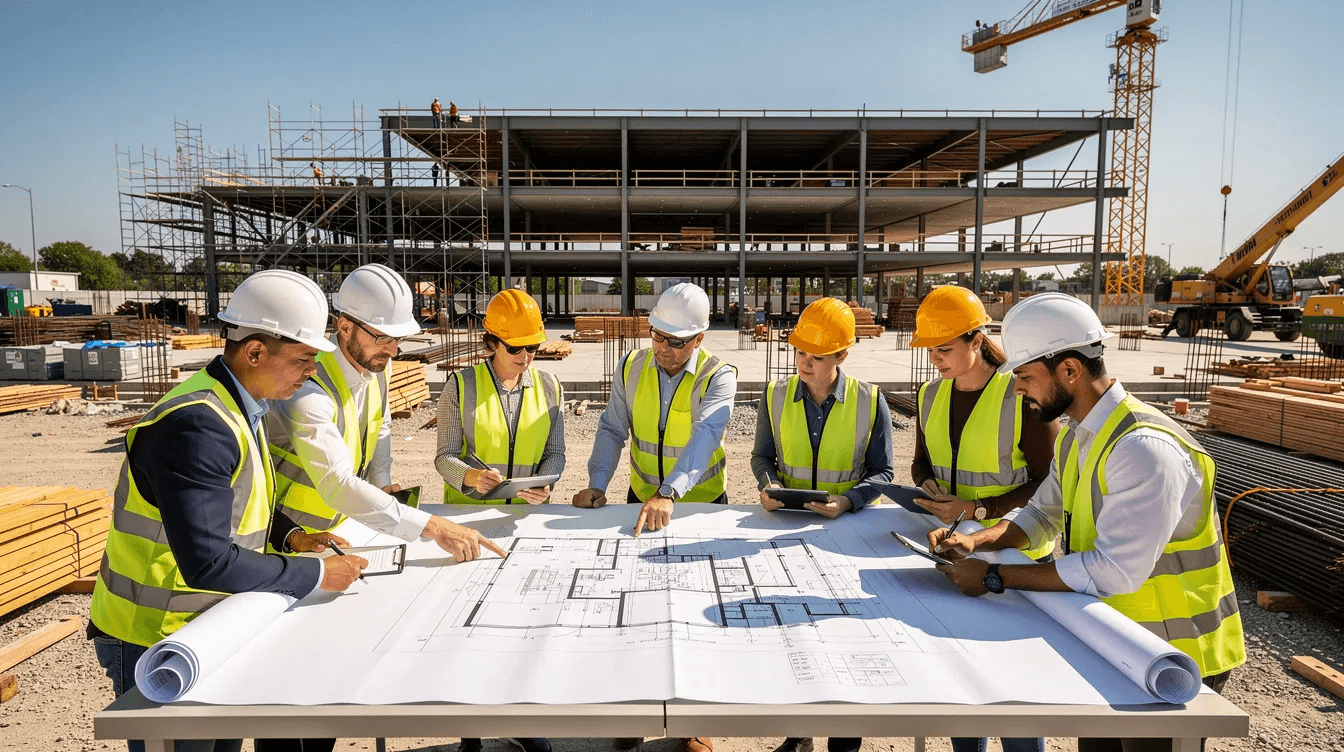
Lifecycle of a Construction Project: From Vision to Handover
Every construction project moves through defined phases. The construction project lifecycle typically moves through initiation, planning, execution, monitoring and control, and closeout. Understanding these phases helps clients know what to expect and when their input is most critical.
Concept and land search: Evaluating site options based on zoning, access, topography, utilities, and constraints. This phase sets the direction for everything that follows.
Feasibility and budgeting: Schematic design, preliminary cost estimates, return-on-investment analysis, and initial schedule development. Construction projects typically require massive capital outlay early for machinery and materials, so early budget clarity is essential.
Pre-construction: Site due diligence, code and zoning verification, detailed budgeting, design coordination, value engineering, and procurement planning. This phase runs 3–9 months before mobilization.
Construction: Mobilization, site preparation, structural work, envelope, MEP rough-in, interior finishes, and inspections. For small commercial fit-outs, expect 8–16 weeks on site after permits. Ground-up commercial construction projects can span 10–18 months depending on size and approval timelines.
Commissioning: Testing systems (HVAC, fire suppression, electrical), completing inspections, and working through the punch list.
Handover: Delivering keys, warranties, operation and maintenance manuals, and occupancy certificates.
Post-occupancy support: Addressing defects, optimizing performance, and responding to warranty items.
VOK Group keeps the same core project team attached across phases to maintain continuity and knowledge of client brand standards. That consistency prevents the information loss that often causes errors during transitions between design, construction, and closeout.
Pre-Construction: Where Successful Project Management Really Starts
Pre-construction typically begins 3–9 months before site mobilization, depending on project size and municipal approval timelines. This phase is where skilled project managers earn their value-because pre-construction planning can identify potential hurdles before construction starts, and comprehensive pre-planning is essential to prevent costly change orders in construction.
Concrete pre-construction activities include:
Site due diligence: Environmental assessments, geotechnical testing, existing-condition surveys (especially critical in renovations), and traffic or neighboring impact studies
Zoning and code checks: Verifying that the intended use is permitted, identifying variances needed, and confirming inspection requirements
Early cost planning: Creating a baseline budget with defined scope, allowances for unknowns, and contingency reserves
Preliminary scheduling: Tying together design milestones, approval timelines, procurement lead times, and trade sequencing
Design coordination with architects, interior designers, and engineers is critical during this phase. The goal is to ensure that what is conceptually appealing is also structurally sound, buildable, and within budget before drawings are frozen. Involving stakeholders early improves project efficiency and coordination, and construction project management emphasizes early problem detection and response.
Value engineering happens here too. For example, choosing alternative flooring systems that deliver a similar aesthetic but lower maintenance costs, selecting HVAC strategies that optimize energy use for the building's specific load profile, or evaluating lighting packages (LED versus premium fixtures) that balance upfront cost with long-term energy savings-particularly important for brand experience or sustainability goals.
Early procurement planning targets long-lead items. In QSR build-outs, kitchen equipment can have lead times of several months. Electrical switchgear, custom millwork, and specialty finishes all require early ordering to prevent delays during construction. Pre-construction processes help avoid costly issues during builds, and pre-construction planning helps identify potential project issues early-before they become expensive problems on site.
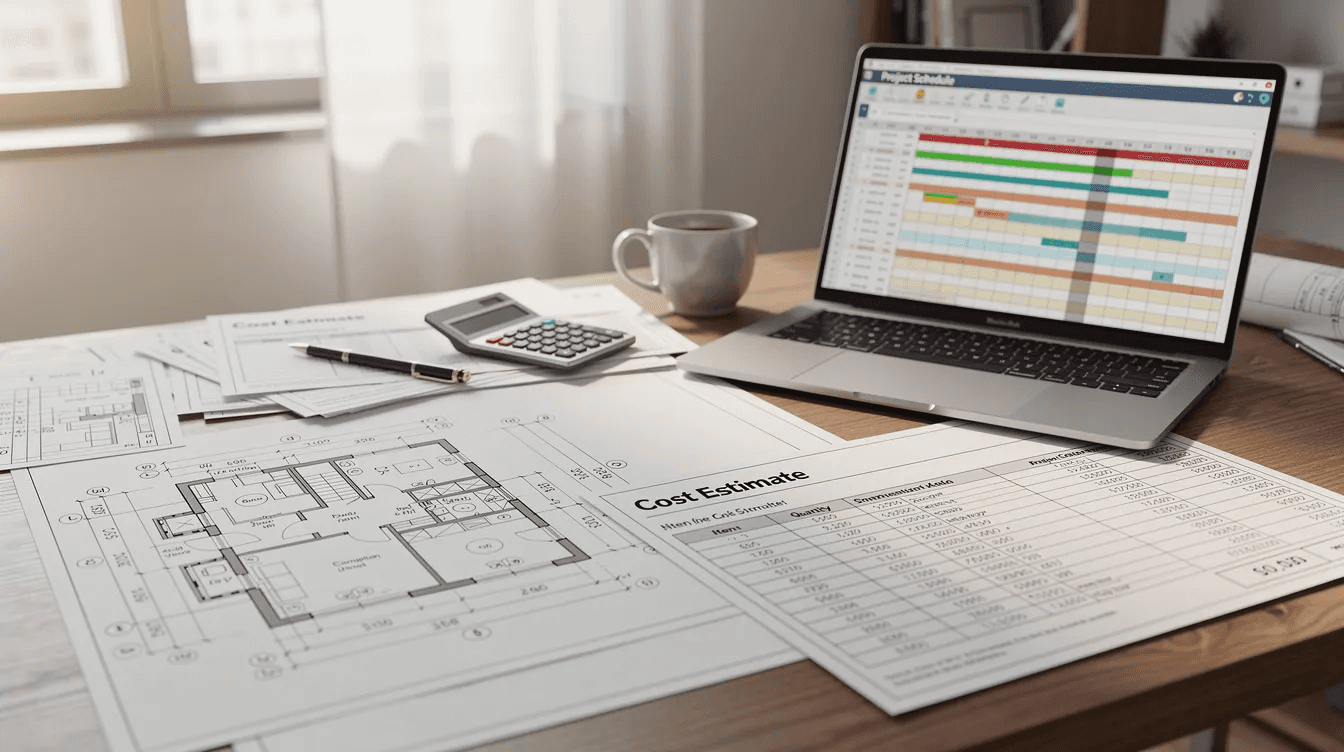
Planning & Project Controls: Budget, Schedule, and Scope
Robust planning and project controls are the backbone of effective construction project management. Without them, even the best design intent falls apart during execution.
A master project schedule is built around major milestones: design stages (schematic, design development, construction documents), permit submission, permit approval, mobilization, major trades (foundations, structural, envelope, interiors), inspections, and substantial completion. Schedules include the critical path, float, sequence of trades, and coordination points. Construction projects must manage dependencies and sequencing of trades to avoid delays-if drywall goes up before rough-in electrical is inspected, rework is inevitable.
Cost planning includes a baseline budget with defined scope, contingency funds (typically 5–15% depending on complexity), and allowances for items not yet finalized. Managing a construction project involves tracking costs continuously, including commitments and actual costs-not just reviewing invoices after the fact. Change management must be structured: change requests documented, cost and schedule impact analyzed, and client approval secured before work proceeds. Research shows that unmanaged change orders can add 10–20% in additional cost or time.
Project controls tools include progress tracking (percent complete by trade or milestone), look-ahead schedules (typically 3–4 weeks ahead), cost reports, and issue logs reviewed with clients at regular intervals. VOK Group uses transparent reporting-through its documented process-to help clients understand cash flow, upcoming decisions, and schedule impacts in clear, non-technical language. Data driven decisions replace guesswork, and clients stay on the same page with project teams throughout delivery.
Identifying Client Needs and Defining Project Requirements
Clarity of client needs early in a project reduces rework, disputes, and cost overruns during construction. This starts with structured discovery meetings where the project manager documents operational needs and brand requirements in detail.
For a QSR franchise, that means mapping kitchen flow, customer seating, back-of-house storage, drive-through logistics, and accessibility compliance. For a custom home, the focus might be aging-in-place design, energy efficiency targets, material quality preferences, and finish selections for custom cabinetry.
Functional requirements-power loads, ventilation rates, sound control, durability of finishes, lighting levels, maintenance expectations-get captured in a written project brief and performance specifications. These documents become the foundation for project plans, design coordination, and procurement.
Concrete examples bring this to life. A franchise rollout requiring consistent brand signage, finish palette, and durable grease-resistant flooring across five or more locations in a single year demands rigorous specification upfront. A residential client focused on long-term comfort might prioritize high insulation values, efficient mechanical systems, and universal design features. In both cases, clear early definition of needs reduces change orders and keeps the project budget intact.
Communication & Collaboration in Construction Projects
A structured communication plan is often the difference between a smooth and a chaotic construction project. A communication plan is essential for construction project success, and poor communication can lead to project delays and increased costs.
What a construction communication plan includes:
Roles: Who communicates what to whom-project manager to client, construction manager to trades, engineers to design team
Frequency: Daily site meetings, weekly project progress reviews, monthly cost summaries, milestone workshops during design phases
Channels: In-person meetings, e mail updates, collaborative platforms, shared document portals
Documentation: Meeting minutes, RFIs, submittal logs, progress photos, updated schedules
On a medium-sized commercial construction project, a typical cadence includes weekly site meetings with the site team and trades, monthly cost review meetings with the client, and milestone design workshops (e.g., at completion of design development and before construction documents begin). Weekly progress meetings help resolve issues and track milestones, and regular progress meetings are important to address roadblocks and review upcoming milestones in construction.
Cross-team collaboration brings together the project manager, construction manager, consultants, trades, landlord representatives, and client brand teams. Clear communication channels prevent misalignment among stakeholders, and using centralized platforms improves document sharing and updates. VOK Group's preference is for transparent, documented communication-meeting minutes, progress photos, updated schedules-so every stakeholder sees the same reality and project progress stays visible.
Execution Phase: Site Management, Safety, and Quality Assurance
Once shovels hit the ground, disciplined site management keeps the construction project on track. The construction manager takes the lead on daily execution, responsible for coordinating trades, managing inspections, enforcing safety protocols, and resolving field conflicts before they cascade into delays.
Physical risks inherent to construction sites necessitate strict compliance with safety regulations. Adhering to strict safety and compliance standards is vital in construction-OSHA requirements, site-specific safety plans, daily safety walks, and trade-by-trade training are non-negotiable. The site team enforces these standards every day.
Quality assurance is embedded in processes, not bolted on at the end. Construction quality management includes inspection and testing, not just final checks. This means:
Reviewed submittals and shop drawings before fabrication begins
Mock-ups of key details (millwork, tile, custom finishes) for client approval
Checklists at each construction stage-foundations, envelope, rough-in, finishes
Documented inspections at required hold points (firestopping, mechanical, electrical)
Commissioning of building systems before handover
For commercial interiors and fit-outs, quality control focuses on levelling of tile in high-traffic areas, millwork alignment, joint consistency, and fire and life safety elements (rated walls, egress paths, exit signage). VOK Group aligns quality assurance processes with local building codes and, where applicable, LEED or other sustainability frameworks to ensure long-term performance beyond just passing inspection.

Risk Management, Change Management, and Problem-Solving
Construction risks are real and varied: permitting delays, supply chain disruptions, weather events, design conflicts discovered on site, and labor shortages that interrupt the schedule. Risk management in construction includes mitigating these unpredictable variables through structured identification and response. Construction relies on a fragmented supply chain and subcontractors rather than unified internal teams, which multiplies the coordination challenge.
The project manager maintains a risk register from pre-construction through completion, assessing each risk by probability and impact, assigning ownership, and defining mitigation actions. This proactive approach aligns with frameworks like the PMBOK risk performance domain, which emphasizes continuous monitoring rather than one-time assessment.
Structured change management keeps scope changes from derailing the project. Change requests are documented, priced, and analyzed for schedule impact before the client approves and work proceeds. This discipline is what separates projects that finish on budget from those that spiral.
Realistic examples: discovering unknown structural conditions behind existing walls during a renovation requires rapid redesign and re-pricing. A delayed delivery of specialty lighting might require substituting an equivalent fixture or adjusting the installation sequence. Effective construction project management requires tight coordination, proactive risk management, and clear communication-and VOK Group's approach is to propose options (time vs. cost vs. quality trade-offs) rather than presenting problems without solutions.
Commercial Construction vs. Residential: What Project Management Looks Like in Each
The demands of commercial construction projects and residential builds differ in meaningful ways, even though the underlying management principles are the same.
For commercial construction-offices, retail interiors, QSR and restaurant build-outs-the focus lands on brand standards, tight opening dates, landlord requirements, complex MEP systems, and coordination with equipment vendors. Commercial construction projects benefit from strategic project management that can handle multi-stakeholder environments, intensive inspection sequences, and regulatory layers (fire marshal, health department, ADA). Local contractors improve accountability and reduce project delays, and local contractors reduce travel time and project delays significantly.
For residential and custom homes, the emphasis shifts to personalization, interior finishes, long-term comfort, energy performance, and more frequent owner involvement in design changes and material selections. Permit pathways are often simpler, trade sequences shorter, and the communication style more personal.
VOK Group uses consistent project controls across both sectors but tailors the process and cadence to each client type and project scale. In commercial work, that means heavier use of RFIs, submittals, vendor coordination, and landlord approvals. In residential, it means deeper involvement with owner selections, aesthetic decisions, and material customizations-with the same underlying commitment to monitoring, efficiency, and successful completion.
Sustainability, Future-Proofing, and Long-Term Performance
Project management decisions made early in the development process directly affect the future operating costs and environmental footprint of the completed space. Building envelope choices (insulation, window performance, air sealing), mechanical system selection, lighting design, and materials all influence energy performance, maintenance requirements, and occupant comfort for decades.
VOK Group's sustainability-focused construction services include coordination with energy consultants, selection of low-VOC and durable materials, and support for LEED-oriented certification. Using technology and digital tools is important for effective construction project management-BIM for clash detection, energy modeling software, and centralized document platforms-but these tools should not replace the management capabilities and expertise of the project teams driving decisions.
Future-proofing strategies include flexible floorplans for evolving retail concepts, additional conduit and raceways for future technology upgrades, structural load capacity for possible expansions, and durable finishes for high-traffic hospitality and QSR spaces. Long-term performance is captured in O&M manuals, warranty documentation, commissioning reports, and maintenance schedules that project managers organize for clients at handover-so the space continues to perform long after the construction team leaves.
How VOK Group Manages Your Next Construction Project
Expert construction project management reduces stress, surprises, and total cost of ownership. It turns what could be an unpredictable process into a structured path from vision to successful delivery-with transparent reporting, proactive risk management, and rigorous quality standards at every stage.
VOK Group's core service protocols map directly to the phases and practices outlined above:
Build: New general contracting and custom homes
Revive: Renovations and remodels
Fit-out: Commercial interiors and brand spaces
Manage: Ongoing project oversight and support
Craft: Custom details and specialty finishes
Sustain: LEED-oriented and sustainable construction solutions
The typical engagement path starts with an initial consultation, moves through concept and feasibility, formalizes with a pre-construction agreement, transitions to a full construction contract, and continues with post-completion support. Every step is documented, every cost tracked, and every decision made with the client's long-term success in focus.
If you're planning a commercial, retail, restaurant, or residential project, start your construction journey with a team that treats your budget, schedule, and brand standards as non-negotiable. VOK Group builds future-proof spaces on a foundation of transparency, integrity, and industry expertise-so your investment performs from day one and for years to come.
